
The ambassadors and provocateurs of Black planning.
Guided by curiosity, diversity, humility, connection, and community, we blueprint the world’s most dignified Black spaces and communities.
Our Story
Black Planning Project emerged from a reflection on the significant lack of Black professionals in the field of planning. After questioning whether she should remain in the field, in 2018, BPP’s founder’s curiosity took her in another direction: to dig deeper and to question why this disparity and exclusion existed.
This involved seeking out other Black planners to learn about their experiences, inspirations, and motivations. What began as a series of individual interviews evolved into a small group of like-minded professionals who met regularly to discuss, share, and organize. Everyone who sat around the table shared similar experiences of isolation and frustration, yet still had a vision to use their skills to advocate for and serve Black communities.
From these meetings, BPP was born.
BPP is focused on tackling systemic barriers faced by Black planners, amplifying the voices of Black planners, and addressing the systemic planning and development challenges faced by Black communities.
At Black Planning Project, we aim to establish Black joy and beautiful Black worlds by transforming the way Black spaces are built.
Our mission is to
Radically transform the way the world builds Black spaces.
We radically transform the community-planning process in three ways:
We Blueprint
We blueprint for a better approach to community planning. We invoke the insights and apply the knowledge of Black community members.
We Advocate
We advocate for inclusive, equitable, and just planning that centres the needs of Black individuals and communities.
We Inform
We share our knowledge so that our process can be replicated and implemented throughout Black communities all over the world.
Our Vision is
Beautiful Black spaces.
Joyful Black lives.
All over the world.
Black joy is a celebration of Black people. It is something indestructible that stems from deep within us. It is dignity, stability, safety, and freedom to live fully within one’s community.
Black joy is inherited; it is passed down to us by generations who used it as a key weapon in their arsenal to fight against centuries of injustice.
When spaces are built with Black people in mind, the joy that is already within Black people expands, rises to the surface, and spreads outward to the rest of the world.
Simply put, beautiful Black spaces amplify Black joy, and it’s our vision to achieve this reality all over the world.
Our Values
We value humility, diversity, curiosity, connection,
and community.
Humility
is at the heart of our work
Diversity
is key to our success
Black folk are not monolithic. Our diversity is reflected in our board, team, partners, and friendships. It is a value we seek to uphold, encourage, and celebrate.
Curiosity
drives us
Connection
makes us stronger
We believe that our interconnected world of Black communities and Black planning professionals is our superpower. This connection is rooted in care, compassion, resilience, and trust.
Community
holds power
Humility

Humility
Humility allows us to learn from the communities we serve, forge authentic collaborations, and give a platform to those whose voices we seek to amplify.
Diversity

Diversity
Curiosity

Curiosity
Connection

Connection
Community

Community
We recognize the wealth of power that lies within the Black community, and we leverage it to take charge of our future and shape beautiful Black worlds.
Join our community to...
Change
Engage
Grow
Who we are
Board of Directors
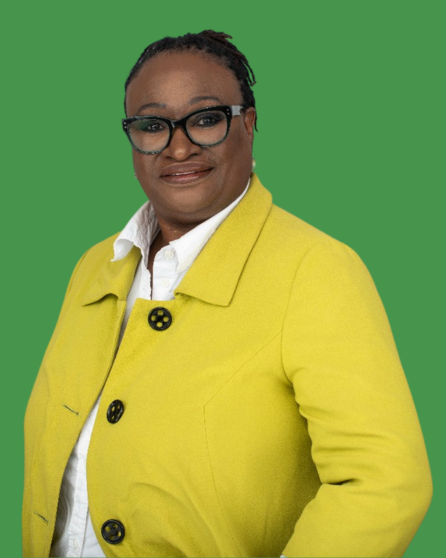
Simone Atungo
Simone Atungo
President
Simone Atungo is a visionary executive with over 30 years of proven leadership across the broader public sector and community-based not-for-profit organizations. A master strategist and systems thinker, Simone brings a rare blend of innovation, operational discipline, and transformative insight to every initiative she leads. Her work has consistently driven measurable impact whether through guiding complex change, shaping policy reform, or co-designing inclusive, future-ready programs and services.
As Founder and CEO of Onuera Consulting, Simone advises executive teams and boards on transformational change, systems innovation, leadership transitions, and equitable growth strategies. Her approach is grounded in principles of collective impact, leveraging cross-sector collaboration to address systemic inequities and achieve long-term community outcomes.
Simone previously served as Assistant Deputy Minister (ADM) in two key Ontario ministries: Community Services at the Ministry of Children, Community and Social Services (MCCSS), and Workforce Policy and Innovation at the Ministry of Labour, Immigration, Training and Skills Development. In both roles, she championed equity-centered transformation in social policy, labour markets, and human service working across sectors to strengthen economic inclusion and workforce resilience.
Her executive leadership spans healthcare, housing, and education, with a strong focus on mental health, community economic development, and affordable housing solutions. She has served as CEO of Vibrant Healthcare Alliance, and held senior leadership roles at Toronto Community Housing, Mount Sinai Hospital, and Parkdale Community Health Centre. In each role, Simone advanced strategies that improved access to care, strengthened community well-being, and supported the economic participation of marginalized populations.
A long-time educator and mentor, Simone was also a faculty member at George Brown College, where she shaped the next generation of leaders in community health and social services for nearly two decades.
Simone holds a Master’s degree in Environmental Studies and a Certificate in Non-Profit Management from York University, as well as an Executive Leadership Certificate from the Rotman School of Management. She also holds the ICD.D designation from the Institute of Corporate Directors, reflecting her deep expertise in governance and board leadership.

Caroline Eugene
Caroline Eugene
Vice-President
I am a retired civil servant with 38 years of experience as a civil servant in Saint Lucia. I retired as Permanent Secretary within the Ministry of Youth Development and Sports. I have worked on sustainable development and environmental conservation issues regionally and internationally. I am passionate about working with vulnerable and marginalized communities.
I hold a BSC (Hons) in International Relations from the University of the West Indies (Mona), MSc in Planning from the University of Toronto as a Canadian Commonwealth Scholar and a Diploma in International Environmental Law from the UNITAR.
As a student of color from a SIDS at the University of Toronto, it was difficult to identify suitable examples. Consequently, the learning experience was not enriched. Being part of BPP allows me to advocate and solicit better opportunities for Black students to help create an enabling environment for them.

Karla Avis-Birch
Karla Avis-Birch
Secretary
Karla is a Civil Engineering graduate from Toronto Metropolitan University with over 20 years experience in regional transit, program management, and infrastructure delivery starting her career at Smart Centres managing construction of Walmart stores, and in her last role as Chief Planning Officer at Metrolinx.
Karla has been Federally appointed as a Board Director for the Windsor-Detroit Bridge Authority responsible for building an international bridge and border crossing, and has served as 2017 and 2018 WTS Toronto Chapter President.
Karla is an advocate for inclusion and has a proven record in giving back to the community. In 2020, she was recognized by TMU with the “Alumni Achievement Award” and featured in publications such as Share Magazine and Women of Influence.

Tolulope Oshinowo
Tolulope Oshinowo
Treasurer
As a human-computer interaction researcher, I’ve witnessed both the systemic barriers that limit opportunities for marginalized groups and the potential of technology to serve as a powerful equalizer. This dual perspective fuels my belief that technology can be a transformative tool for fostering more equitable and sustainable futures. I was drawn to the Black Planning Project for its dedication to amplifying marginalized voices and reimagining urban planning through the lenses of people, place, pedagogy, and practice. BPP aligns perfectly with my conviction that transformative change starts with inclusion, representation, and innovation, enabling me to combine my passion for technology with my commitment to social equity in creating resilient, just communities.

Lena Phillips
Lena Phillips
Board Member
Lena D. Phillips is an urban and spatial practitioner whose work explores the intersections of justice, liberation, land, housing, and law. Her practice is grounded in feminist, anti-colonial, transnational, and anti-racist frameworks.
Through her work, Lena has supported grassroots and systems change initiatives led by and for Black, Indigenous, and African communities in Canada and East Africa. She has also worked on projects that used design, creative technology, and artistic practice as tools of protest.
Her graduate studies in the UK and South Africa focused on urban development and planning, with a particular emphasis on land, housing, and property. She is currently in her final year at McGill University’s Faculty of Law, where she has deepened her commitment to public interest work.
Lena views BPP as a vital space for reshaping planning practices and building more inclusive, resilient communities. She is motivated by the opportunity to contribute to a platform that amplifies a diversity of Black perspectives in urban development and challenges oppressive structures in spatial and city planning.

Moussa Sène
Moussa Sène
Board Member
Moussa joined the Black Planning Project to help integrate Black perspectives into how cities and communities are imagined, planned, and built. He is committed to advancing more inclusive and resilient communities, and sees BPP as a vital space for shaping the future of equitable urban development.
On the board, he contributes expertise in strategic planning, stakeholder engagement, and cross-sector collaboration. He also brings experience in municipal leadership, having advised the Office of the Mayor of Montreal on strategic initiatives related to sustainability, urban development, and public policy.
He holds a bachelor’s degree in urban planning and a master’s in sociology, and brings over 17 years of experience spanning community organizations, consulting firms, and government.
Staff & Consultants

Abigail Moriah
Abigail Moriah
Executive Director
Abigail is a consultant and an urban planner specializing in affordable housing for over 15 years. She is passionate about connecting people, mentorship, creating spaces for belonging as well as building an equity focus in the field of planning. In all of her work, Abigail seeks to build bridges across sectors, where she can encourage intentional and meaningful engagement between community, practitioners and academic institutions with the goal of redefining how planning is done in communities through practice and research.
Through BPP, Abigail hopes to contribute to knowledge and practice in the field of planning and development from the perspective of Black individuals.

Hanaa Ali
Hanaa Ali
Senior Manager, Planning & Research
Hanaa Ali is the Senior Manager, Planning & Research at Black Planning Project, where she manages research and consulting projects that aim to improve planning processes and outcomes for Black communities. Hanaa holds a Master’s in Human Settlements and a PhD from KU Leuven, Belgium. Her academic research centers on forced displacement and the urban policies that shape displaced persons’ right to the city. Her work provides critical insights into the complexities of settlement and displacement within urban environments, offering a nuanced perspective on how cities can become more inclusive and equitable.
Keen on advancing diversity, equity, and inclusion (DEI) within professional organizations and nonprofits, Hanaa served as Vice-Chair of the Inclusion, Diversity, Equity, and Allyship (IDEA) Committee at Toronto Commercial Real Estate for Women from 2020 to 2022. She is also a passionate advocate for empowering young talent. In 2023, she spearheaded the upskilling of Black youth through the Advanced Digital and Professional Training program at the Diversity Institute, Toronto Metropolitan University (TMU).
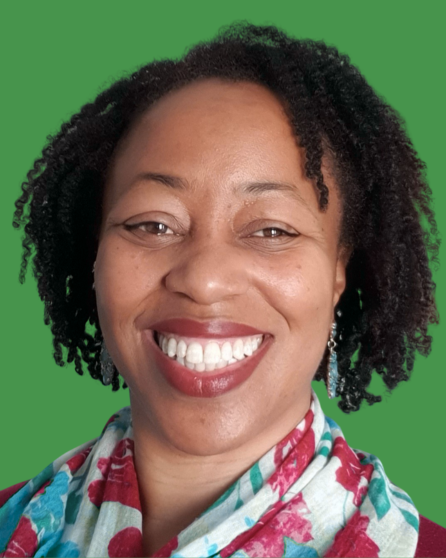
Simone Weir
Simone Weir
Community Relations Manager
Simone is a community developer, project manager and event organizer, with over 10 years’ experience working in community economic development in both Montreal and Toronto. She holds an Honours Bachelor of Arts degree in Urban, Economic & Social Geography and Caribbean Studies and a Master of Education in Adult Education and Community Development, both from the University of Toronto.
Simone’s involvement with the Black Planning Project is born from a passion to increase dialogue, engagement and understanding of the Black experience and its relation to public spaces. Simone hopes to achieve this through writing, innovative research and education.
Our Work

Black Nonprofit Affordable Housing Development Toolkit: A Case-Study Approach
Black Nonprofit Affordable Housing Development Toolkit: A Case-Study Approach
For Black community-based organizations, the development process in delivering affordable housing is complex and remains a substantial challenge for many Black-led community-based organizations and nonprofits. After years of advocacy for improved resource allocation and access to land, Black nonprofits are at the cusp of acquiring land and are actively engaging with municipalities and communities to develop affordable housing solutions to meet the housing needs of Black communities. To support these organizations in the early stages of pre-development, Black Planning Project (BPP) will provide Black-led nonprofits and community-based organizations with in-depth case studies that offer actionable insights into the planning, design, policies, and processes that have been effective in delivering supportive and affordable housing for Black communities.
This research project aims to empower Black-led organizations’ approach to their projects more effectively, assess their readiness, and build the capacity needed to implement successful housing solutions for Black communities. Additionally, it will facilitate knowledge-sharing across different organizations, enabling a collaborative ecosystem for equitable Black affordable housing development.
A key aspect of the case study research is to evaluate what constitutes successful housing projects for Black communities. By focusing on affordability, sustainability, and the success of fostering communities of care, we assess how these housing projects have positively impacted Black individuals, families, and the communities created. The research will highlight effective strategies for creating supportive environments that promote long-term stability and well-being, which will be embedded into a Black-informed, Black-led and Black-centred toolkit for affordable housing development.
Our Main Goals
Project Phases
Year 1
- Co-developing with Community Partner Organizations the research questions that inform the case-study research
- Detailed case study research and toolkit reviews, culminating in case snapshots and a resource database
- Testing and confirming findings with Partner Organizations. A readiness checklist will be piloted to evaluate the applicability of findings to community needs
Year 2
- Developing technical tools supporting pre-development and pre-construction activities based on identified capacity-building needs, followed by Pilot Workshops
- Knowledge mobilization activities inclusive of deliverables such as the toolkit, case study snapshots, readiness checklist, and resource database.
Ultimately, the research will provide a critical resource to build the capacity of Black-led organizations, supporting equitable access to affordable housing development opportunities through knowledge sharing, tools, and community engagement.
Share Your Experience.
Team
Abigail Moriah
Shane Laptiste, SOCA - Studio of Contemporary Architecture
Curtis Whiley, UHPCLT
Hanaa Ali
Zahra Williams, zzap Architecture & Planning
Veronica Marsman, AKOMA Holdings
Shameel Chankar
Connor Wallace, zzap Achitecture & Planning
Djaka Blais, Hogan's Alley Society (HAS)
Renée Powell-Hines
Benita Ikirezi
Funded by

Our Services


Anti-Black Racism Audit & Framework for the University of Toronto Planning Program
Anti-Black Racism Audit & Framework for the University of Toronto Planning Program
The Department of Planning and Geography engaged BPP to conduct an anti-Black racism curriculum review and program audit as part of a broader Planning Program Review process to address anti-Black racism in planning. This decision was made in response to activism and organizing by planning students at the University of Toronto around anti-Black racism in 2020.
Methods & Tools
BPP worked with a faculty lead, a PhD and Masters student and two committees the Program Review Committee,
BPP engaged in the following activities for the audit.
- Establishing an understanding of anti-Black racism in the Canadian context and its historical and present-day relationship to land use planning and settlement.
- Developing a tool for analyzing anti-black racism content in courses, curriculum and course syllabi for the master planning programs.
- Holding consultations, interviews and a survey with faculty, students, alumni and practicing planners about their experiences within and interacting with the program.
- Hosting a Town Hall to deliberate and prioritize recommendations.
Recommendations
Consultations and interviews helped to shed light on the experiences of students, alumni, and Black planners in the program and what they felt could be done to address anti-Black racism and create more inclusive learning environments. The recommendations put forward in the audit are grounded in these experiences.
Emergent themes:
- the need to embed an intersectional lens in addressing ABR content across the curriculum
- the need to dedicate core or elective courses to Black planning issues.
- the need to transform the curriculum to include more Black perspectives, knowledge, and experiences
- the need to improve faculty representation and academic diversity.
- the need to provide additional support for Black students in the program as they transition from school to the workplace.
For more information see the Anti-Black Racism Framework for the Planning Program and the Planning Program Internal review includes some actions emerging from the audit recommendations.
Participate in the Buying While Black Survey.
If you decide to take part in this study, you will be asked to participate in an anonymous online survey to answer a series of questions about your home-buying experience in the GTHA.
It will not ask for your name, contact number, email, or address, but it will ask for your age group, income group, gender, and ethnic origin. The survey should take you 25–30 minutes to complete.
Our Services

Buying While Black: Barriers to Black Homeownership in the GTHA
Buying While Black: Barriers to Black Homeownership in the GTHA
Homeownership has traditionally served as a primary avenue for wealth accumulation among Canadian households. However, many Black Canadians still face barriers to homeownership, particularly in the Greater Toronto Hamilton Area (GTHA). With homeownership rates among Black households within the Toronto CMA remaining the lowest at 38.9%, compared to 62.3% for racialized groups and 67.9% for non-racialized groups, a significant economic disparity persists. This gap impedes the intergenerational transfer of wealth for Black households, exacerbating existing economic inequalities.
This study promotes improved access to homeownership for Black Canadians as part of a broader effort to confront systemic anti-Black racism in societal and institutional frameworks. Achieving this goal requires comprehensive governmental policies and investments, as well as reforms within the real estate sector, to address and raise awareness of the obstacles confronting potential Black homeowners. Additionally, community-level investments are crucial to empower Black and other racialized groups to participate in wealth accumulation through the housing market, fostering intergenerational prosperity and socioeconomic equity.
Our Main Goals
The research explores the obstacles that hinder homeownership for Black Canadians using a mixed-method approach that incorporates statistical analysis, survey data, and qualitative interviews with Black homebuyers and real estate professionals.
KEY BARRIERS FACING BLACK HOMEBUYERS
Challenges in securing down payments, qualifying for mortgages, and accessing equity.
Limited exposure to the home-buying process, weak financial literacy, and difficulty accessing reliable information.
Discriminatory treatment when attempting to purchase a home, including more scrutiny on mortgage applications, steering towards racialized neighbourhoods, undervaluation of homes, and rejection of offers without apparent cause.
Share Your Experience.
Research Team
Dr. Nemoy Lewis
Toronto Metropolitan University
Alexander Lovell
Selma Elkhazin
Abigail Moriah
Black Planning Project
Richard Maaranen
Jamila Gowie
Hanaa Ali
Black Planning Project
Dr. Orlena Broomes
Jodie Laborde
Funders and Partners


Our Services

Navigating Racism in Workplace: Unveiling the Experiences and Strategies of Black Urban Planners in Canada
Navigating Racism in Workplace: Unveiling the Experiences and Strategies of Black Urban Planners in Canada
The “Navigating Racism in Workplace: Unveiling the Experiences and Strategies of Black Urban Planners in Canada” report, prepared by the Black Planning Project, offers an invaluable investigation into the experiences of Black urban planners within Canada, highlighting both the challenges they face and the strategies they employ in response when navigating racism in their workplaces. This research gains significance against the backdrop of a recognized need for greater diversity in urban planning, a profession that greatly benefits from diverse perspectives, especially in multicultural urban environments. Funded by the Government of Canada through the Community Support, Multiculturalism, and Anti-Racism Initiatives Program, this study illuminates the nuanced barriers to entry and advancement for Black professionals in the field, alongside their impact on mental health and professional development.
Research Goals
This report embarks on an exploratory journey to shed light on the landscape of diversity within the field of urban planning, with a special focus on Black professionals in Canada. Recognizing the existing knowledge gap aims not only to map out the current state but also to serve as a catalyst encouraging further research and understanding of ways to improve anti-racist support in the field. By delving into the underrepresented area of Black professionals’ experiences and contributions within urban planning, this report seeks to illuminate paths toward a more inclusive and enriched field where Black Planners have their challenges and barriers recognized and, consequently, tailored support toward an anti-racist work environment. It invites stakeholders at all levels to learn from its findings and recommendations, fostering a collective movement that embraces and enhances diversity.
Findings
The narratives of Black planners illuminate anti-Black racism as a critical and multifaceted obstacle in their professional journeys. This racism manifests both subtly and overtly, affecting not only the individual planners but also the wider profession. If unaddressed, the profession risks losing valuable talent, exacerbating the existing mistrust Black planners bear towards the planning associations meant to support and advocate for them. Thus, the Black Planners Project (BPP) initiated this groundbreaking study, acknowledging the necessity for action and dialogue in tackling these pervasive issues.
Participate in the Buying While Black Survey.
If you decide to take part in this study, you will be asked to participate in an anonymous online survey to answer a series of questions about your home-buying experience in the GTHA.
It will not ask for your name, contact number, email, or address, but it will ask for your age group, income group, gender, and ethnic origin. The survey should take you 25–30 minutes to complete.
Funded by:
This project has been made possible in part by the Government of Canada, Community Support, Multiculturalism, and Anti-Racism Initiatives Program (CSMARI)
Our Services
Anti-Black Racism Audit & Framework for the University of Toronto Planning Program
Navigating Racism in Workplace: Unveiling the Experiences and Strategies of Black Urban Planners in Canada
What is our community saying?

Research about Black planners’ experiences is lacking so, when the Black Planning Project told me about their research project, investigating the workplace experiences of Black planners, I wanted to learn more…This research is a first of its kind in the planning realm and is a call to action for a collective response to anti-Black racism.
Research about Black planners’ experiences is lacking so, when the Black Planning Project told me about their research project, investigating the workplace experiences of Black planners, I wanted to learn more...This research is a first of its kind in the planning realm and is a call to action for a collective response to anti-Black racism.
Dr. Leela Viswanathan
Viswali Consulting

Divercities seeks to work with BPP whenever possible. BPP brings a unique perspective to projects both from the development and community perspective with an equity lens. This perspective is difficult to find. Furthermore, their services are always provided under an umbrella of professionalism.
Divercities seeks to work with BPP whenever possible. BPP brings a unique perspective to projects both from the development and community perspective with an equity lens. This perspective is difficult to find. Furthermore, their services are always provided under an umbrella of professionalism.
Sameer Patel

Earlier this year, we had the pleasure of hosting a presentation on Black Planning in Action: Black Displacement Project Case Study, featuring Abigail Moriah, an accomplished urban planner and consultant, and a past Bousfields Distinguished Visitor. Her presentation offered a powerful exploration of critical issues in urban planning. Abigail's expertise in affordable housing and community development, along with her focus on centering Black experiences, raised vital questions about who is planning for Black communities and the impact of these decisions. Our audience consisted of professionals at all stages of their careers, and her insights have been invaluable in broadening our understanding of planning's role in affecting Black communities.
Louis Tinker
Bousfields Inc.

We had the pleasure of collaborating with Black Planning Project on the first-of-its-kind African Nova Scotian Housing Strategy. This was a long-term, highly-involved initiative, bringing over 150 community members into a collaborative process to co-create the strategy. BPP’s thoughtful approach, critical analysis, and deep curiosity about housing experiences for African Nova Scotians made for a collaborative and supportive working relationship and project output. BPP challenged the status quo and pushed the entire project team to an end product that will have lasting impact.
Adrienne Pacini

The Black Planning Project has become an important city-building leader in Toronto and an essential partner for ULI Toronto. Its research into historic and ongoing Black community displacement in our city has revealed deep structural issues that public policy makers can no longer ignore. BPP has opened our city’s eyes to racist practices of the past and offers an opportunity for a just and equitable future.
The Black Planning Project has become an important city-building leader in Toronto and an essential partner for ULI Toronto. Its research into historic and ongoing Black community displacement in our city has revealed deep structural issues that public policy makers can no longer ignore. BPP has opened our city’s eyes to racist practices of the past and offers an opportunity for a just and equitable future.
Richard Joy
ULI Toronto

The lived experience of Black planners gives rise to a unique and important perspective to bring to land planning and development in the GTA and throughout Canada. Habitat for Humanity GTA applauds the work of the Black Planning Project and has been proud to have partnered with them on CMHC-funded research on “Buying While Black.”
The lived experience of Black planners gives rise to a unique and important perspective to bring to land planning and development in the GTA and throughout Canada. Habitat for Humanity GTA applauds the work of the Black Planning Project and has been proud to have partnered with them on CMHC-funded research on "Buying While Black.”
Habitat for Humanity

Lauren Haein An
URBAN STRATEGIES INC.

Flourish develops affordable housing in many communities in Canada. Abigail brought a rich understanding of Black perspectives in planning that have helped our team expand our awareness and curiosity of equitable development. Her passion, commitment, and tangible experience in this area was an encouragement to our entire team.
Michael Bowering
Flourish
Our Services