
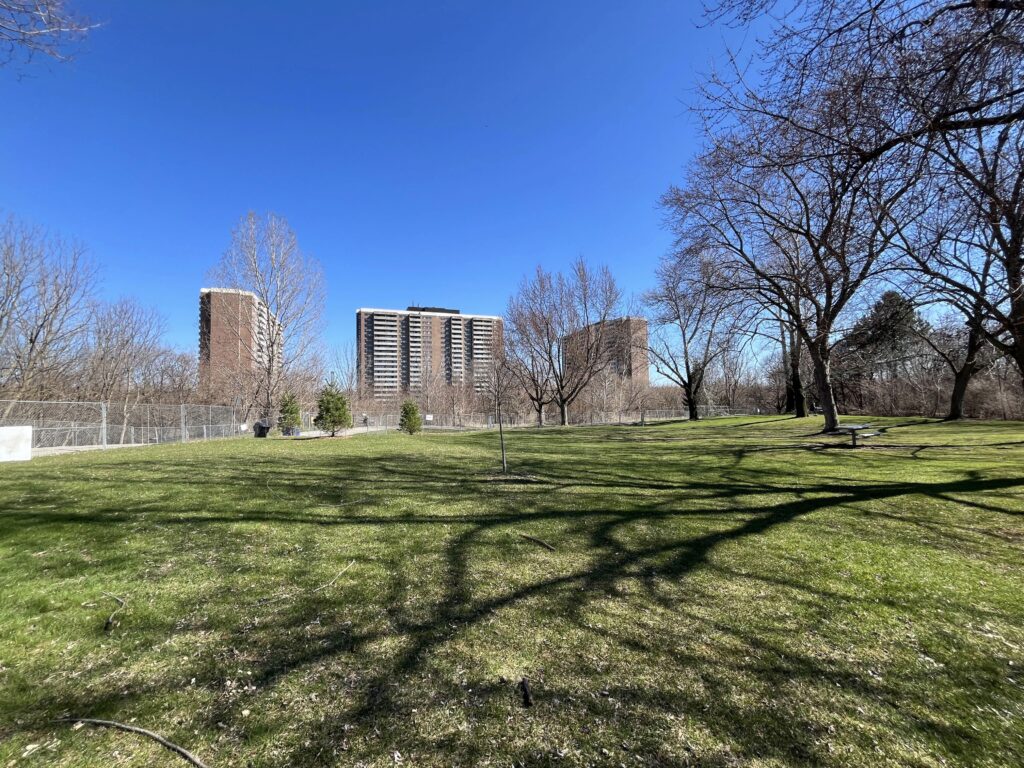
Mapping Black Urban Health in Toronto’s Neighbourhoods
Mapping Black Urban Health in Toronto’s Neighbourhoods, is a research project undertaken by the Black Planning Project (BPP) in partnership with Learning Enrichment Foundation (LEF) for the Black Planners and Urbanists Association (BPUA). The project received funding support from the Foundation for Black Communities (FFBC)’ Black Ideas Grant (B.I.G).
The project examined how urban planning and the built environment shape the health and wellbeing of Black Torontonians in predominantly Black neighbourhoods across the city.
Selecting Mount Dennis
The Mount Dennis neighbourhood’s selection as the project’s central case study was informed by several factors including current affordability and displacement pressures faced by Black residents in Mount Dennis due to new public transportation infrastructure and private development; the timeliness to inform on-going community planning activities related to the Mount Dennis for All Community Action Plan; and the strength of existing community relationships, which included expressed partnership interest and support from the Learning Enrichment Foundation (LEF).
About the Research
Building upon the World Health Organization (WHO)’s understanding of urban health, this project posits that Black urban health is a distinct phenomenon that can be better understood when one holistically assesses the historical, social, physical, economic and cultural conditions that affect Black people who live in urban environments. This includes factors such as environmental health, access to amenities and services, mobility and safe transportation, access to safe and affordable housing, and equitable economic development. In addition to the physical health and wellbeing outcomes of Black people, including mental health, Black urban health can also be measured by the extent to which Black people have access to health-supporting infrastructure, such as culturally specific physical and mental health supports, culturally grounded food systems, peer support networks, spaces for collective healing, faith-based and intergenerational spaces, and access to Black-led service organizations.
Participate in the Buying While Black Survey.
If you decide to take part in this study, you will be asked to participate in an anonymous online survey to answer a series of questions about your home-buying experience in the GTHA.
It will not ask for your name, contact number, email, or address, but it will ask for your age group, income group, gender, and ethnic origin. The survey should take you 25–30 minutes to complete.
Funded by:
The project received funding support from the Foundation for Black Communities (FFBC)’ Black Ideas Grant (B.I.G).
